
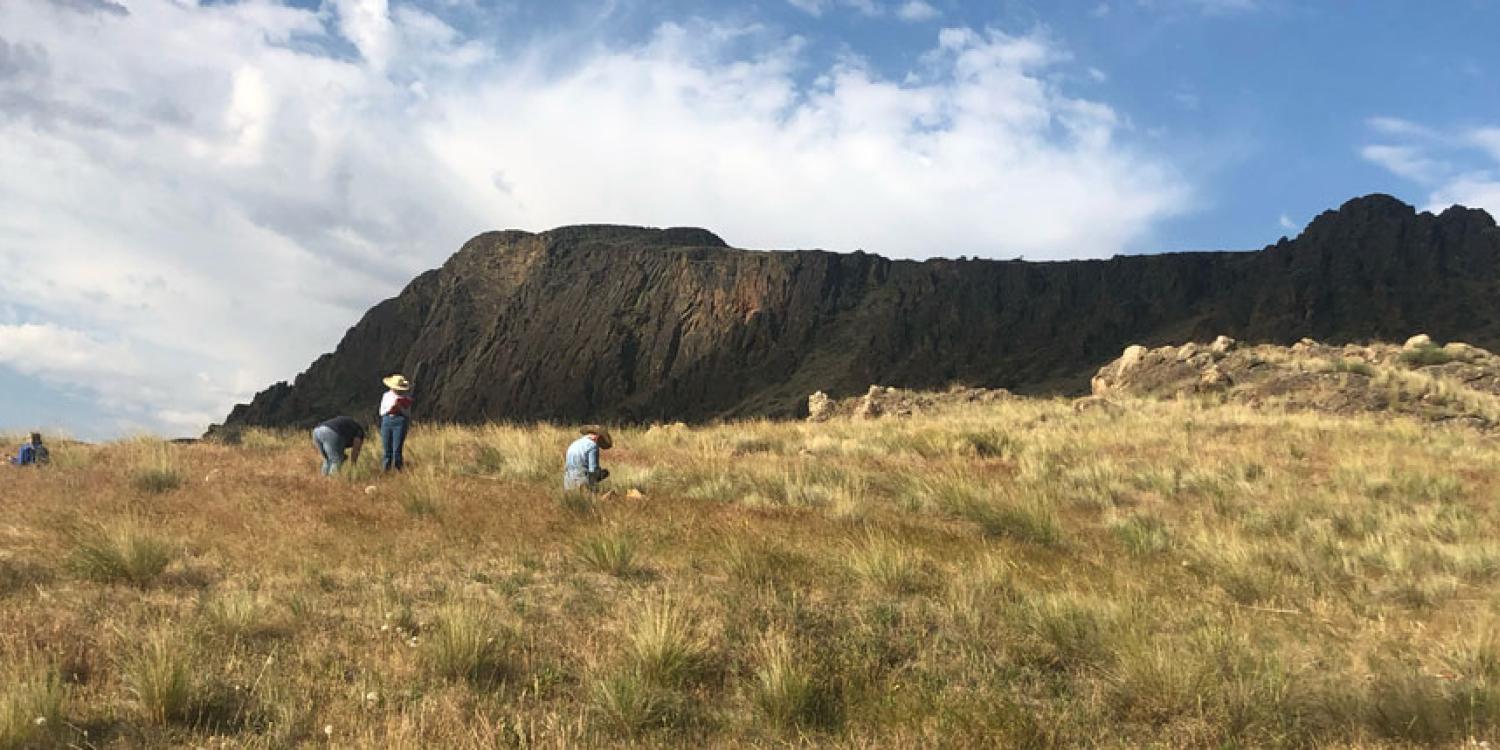
Invasive grasses — often called “fine fuels” — pose a major wildfire threat and jeopardize the biodiversity of the Northern Great Basin, including Malheur County. These fast-growing grasses outcompete native plants, dry out quickly, and increase fire risk, endangering rangelands vital to the region’s cattle and dairy industries.
Over the past eight years, the project has removed more than 6,500 tons of fine fuels from Malheur County rangelands. These efforts have helped prevent wildfire damage and saved ranchers an estimated $313,000 in feed costs.
Nearly 77% of Malheur County is designated as rangeland, much of it federally managed. Invasive grasses weaken ecological stability and reduce agricultural productivity. Over the past decade, nearly 2.5 million acres in the region have burned, putting further pressure on agricultural resilience in a county where cattle ranching accounts for 59% of all agricultural sales.
To address this challenge, Sergio Arispe, livestock and range field faculty specialist with the Oregon State University Extension Service and associate professor in the College of Agricultural Sciences, partnered with the U.S. Bureau of Land Management, Boise State University and the University of Idaho.
Arispe and his team developed a research-based approach that extends the grazing season into fall and winter. This targeted grazing strategy helps reduce the buildup of fine fuels before fire season.
With strong engagement from local cattle producers, Arispe tested whether cattle could graze invasive grasses during dormant seasons without harming native plants. The team implemented contracted grazing on public lands, reducing wildfire risk and lowering winter feed costs for ranchers.
Supported by a $515,132 grant, Arispe’s work also incorporates drone technology to study grazing patterns and plant response. The drones help researchers monitor rangeland conditions and refine management strategies.
Over the past eight years, the project has removed more than 6,500 tons of fine fuels from Malheur County rangelands. These efforts have helped prevent wildfire damage and saved ranchers an estimated $313,000 in feed costs.
Importantly, the grazing has not harmed native plants such as perennial bunch grasses, which support wildlife habitat and are less flammable than invasive species. The success of this research has been published in scientific journals and shared with public land agencies to inform policy and best practices.
Arispe’s ongoing work, strengthened by drone data, will continue to support restoration of sagebrush ecosystems, improve land resilience, and enhance the long-term sustainability of Malheur County’s rangelands and agricultural economy.