
The Oregon State University Extension Service 4-H Youth Development Program serves nearly 25,000 youths statewide, giving young people hands-on learning opportunities in every part of the state. In Lane County, Extension 4-H staff were hearing the same message from families and teens: After the COVID-19 pandemic, youths needed a safe place to reconnect, practice real-world skills and get ready for life after high school.
A post–COVID-19 environment also showed that families felt less connected to community partners. Schools were focused on academic goals and standardized testing, so Extension 4-H looked for a way to complement what schools offer and to fill the life-skills gap. Adulting 101 brought these needs together into one solution for teens.
Elizabeth Gangwer, 4-H outreach program coordinator in Lane County, created Adulting 101: A life skills series, a seven-part workshop series designed for teens to gain skills they can take into their post–high school journeys. Sessions included:
- Career readiness and goal setting.
- Self-defense.
- Budgeting basics.
- CPR and first aid training.
- Mental health care and wellness.
- Emergency preparedness.
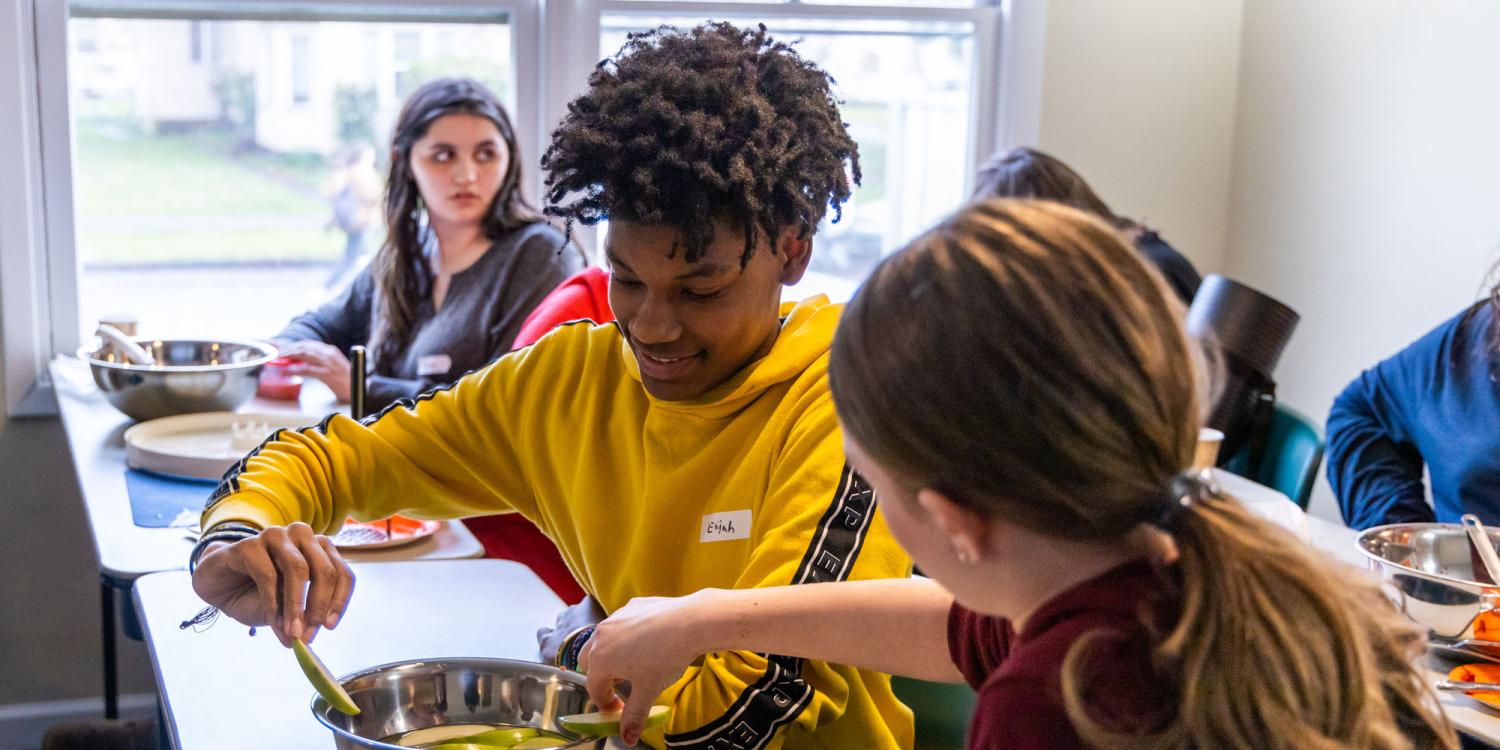
- Cooking and food basics.
Later offerings also included car basics, food preservation basics taught by Extension Master Food Preservers, and general home maintenance. Many sessions were taught by local volunteers and community partners, including Extension nutrition educators and Extension faculty in the Family and Community Health Program. The goal was to provide a safe space for teens to learn about adulting and to talk about the stresses and fears that can come with getting older. Staff reported that engagement was high and the goal was exceeded.
To help teens keep using what they learned, the series provided tools and take-home items tied to each topic. These included planners, water bottles, first aid kits, yoga mats, guided mindfulness journals, flashlights, LifeStraws, carabiners, cutting boards, recipes, car emergency kits and certificates in CPR, first aid and self-defense.
In 2023, 17 teens signed up and 14 completed all sessions. In 2024, 22 teens enrolled, with 16 to 20 attending each session. More than 60% of participants were non-4-H youths, which means the series introduced new families to OSU Extension. Parents and youths asked for more topics or for the same topics offered at a deeper level. Extension faculty noted that the series helped rebuild connections with community partners that families had not seen as often during the pandemic.
Because of the success in Lane County, Extension staff in neighboring Linn County requested the outline and adapted the series for local needs in early 2024. They opened it to all high school youths in the county, not only enrolled 4-H members, and capped the series at 20 teens who committed to attend as many sessions as possible.
Through Adulting 101, teens in Lane and Linn counties gained practical skills, reduced stress about entering adulthood and built healthy relationships with adults in their communities who can answer questions and offer support.
Local instructors led sessions on resumes and goal setting, CPR/first aid through the Red Cross, mental health and wellness, food safety and nutrition using a Food Hero recipe, car basics and self-defense, budgeting, and general house maintenance such as plunging a toilet, using a drill and spotting leaks. The final session was a reflection and celebration with practice job interviews led by community partners.
At the start, many participants didn't know each other and some identified anxiety or being on the autism spectrum on their registration forms. The first session was quiet. By the final session, youths stayed an extra hour to exchange contact information and make plans to stay connected, showing that the series created a safe social space as well as a learning space.
Participants said they gained skills that will help them in the future and that they are now more open to trying new things. Opening the series to non-4-H youths also brought new families to Extension and strengthened relationships with local organizations.
Through Adulting 101, teens in Lane and Linn counties gained practical skills, reduced stress about entering adulthood and built healthy relationships with adults in their communities who can answer questions and offer support. With support from the Oregon 4-H Foundation and local partners, Extension 4-H staff plan to continue the series and make it available to additional counties.
This initiative shows how OSU Extension responds to locally identified needs and delivers education that is practical, affordable and open to youths beyond enrolled 4-H members. When youths know how to budget, maintain a car, cook safely, respond to emergencies and care for their mental health, they are less likely to experience preventable crises and more likely to contribute to strong, resilient communities.
Adulting 101 also reconnects families with community partners and introduces new audiences to research-based Extension resources. In this way, public investment in Extension returns value through better prepared young adults, stronger family and community ties, and local networks that can be activated for future education.