
Frequent rain and mild temperatures on the northern Oregon Coast can make it difficult for diversified specialty crop growers to establish fall cover crops. When cover crops fail or grow slowly, farmers lose an important tool for protecting and improving soil.
By identifying cover crops that perform well on the Oregon Coast and showing that higher seeding rates may not improve results, OSU Extension helped growers reduce unnecessary expenses and make more efficient use of land, labor and seed.
For small-acreage farms, that can mean more weed pressure, higher input costs and fewer options for building soil health between cash crops. Growers need practical information about whether warm season cover crops can work better in summer, especially under dry-farmed conditions that reduce irrigation and labor.
In response, Shannon Rauter, coordinator of the Master Gardener and Small Farms programs in Clatsop County for Oregon State University Extension Service, worked with a local farmer to explore whether summer cover crops could provide a better option.
Rauter partnered with Teresa Retzlaff of 46 North Farm to test warm season cover crops in a dry-farmed system typical of many small coastal vegetable farms.
The project focused on two questions: which warm season species perform well in dry-farmed, diversified vegetable systems on the Oregon Coast, and whether doubling the recommended seeding rate improves germination and canopy cover.
On-farm research tests cover crop options
Rauter and Retzlaff selected six species based on research, grower interest and seed availability: buckwheat, lacy phacelia, vetch, peas, pearl millet and sorghum × sudangrass. Each species was planted in four plots, with two seeded at the standard rate and two at double the rate.
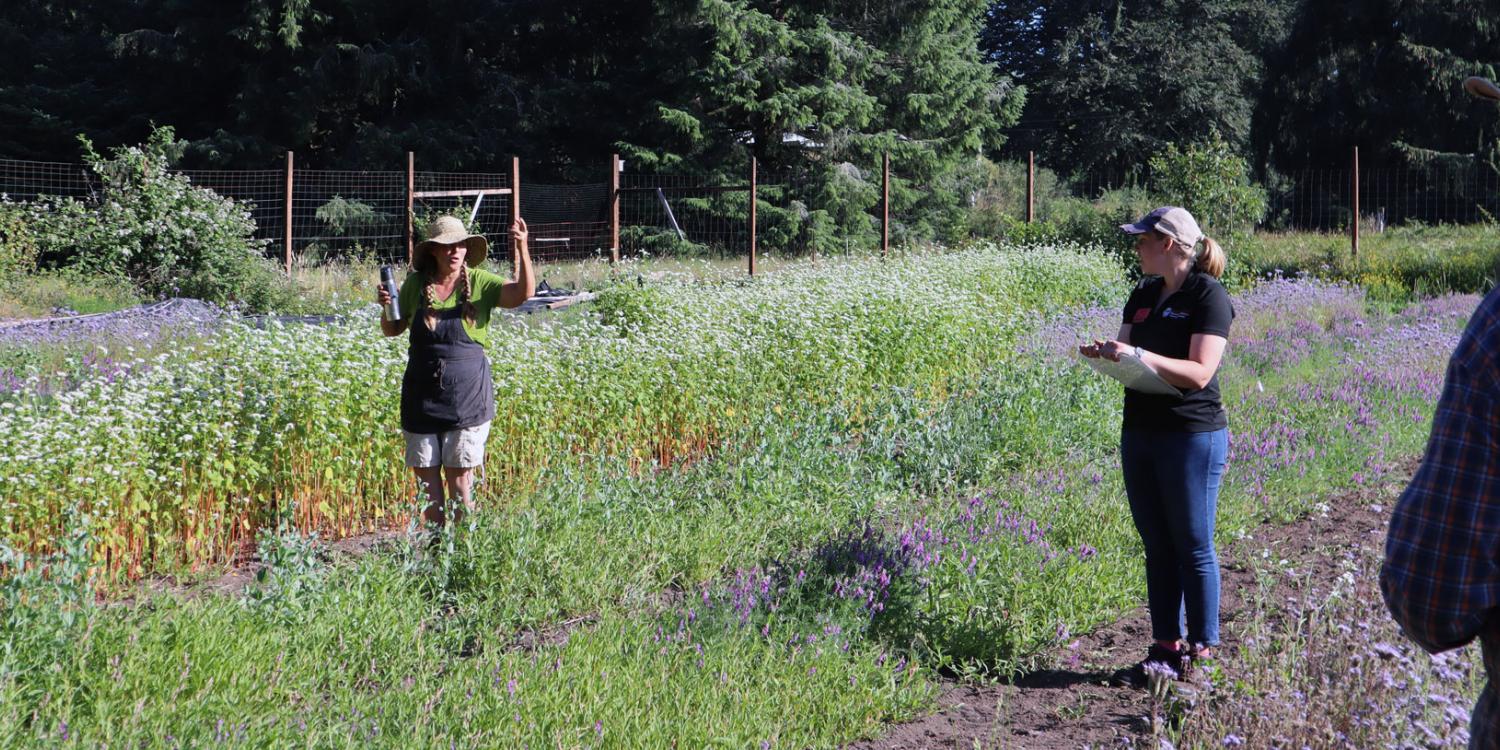
Seeds were broadcast by hand May 1, 2025, and rolled to improve soil contact. No irrigation was used and all species germinated within two weeks.
Buckwheat and phacelia produced the strongest canopy cover, reaching 60% to 90%. Vetch and peas reached 20% to 40%, while pearl millet and sorghum × sudangrass reached 10% to 30%.
Buckwheat and phacelia also flowered earliest, about eight weeks after seeding. Vetch and peas followed at about 10 weeks, while sorghum × sudangrass and pearl millet took more than 14 weeks.
Rauter hosted an on-farm field day that drew 16 local farmers to tour the plots, discuss practices and review findings.
After the trial, the cover crops were terminated and replaced with a cool season cover crop for the next year’s vegetable production. Soil sampling is scheduled for April 2026 to measure changes in soil pH and fertility.
Results identify promising crops, reduce seed costs
Buckwheat and lacy phacelia emerged as the most promising warm season cover crops for Oregon Coast farms. Both produced rapid canopy growth and timely flowering, giving growers practical summer options for soil coverage.
Vetch and peas showed potential but may work better with different planting methods or in species mixes. Pearl millet and sorghum × sudangrass performed poorly in the cooler coastal climate and were not recommended.
The trial also found that doubling the seeding rate improved early canopy growth but did not improve final cover or reduce weed pressure.
That finding matters for small-acreage farmers because many apply extra seed to offset mild temperatures or bird predation. The results suggest higher seeding rates may not be necessary, helping farmers save money.
Field day participants expressed interest in trying buckwheat and phacelia and said the demonstration increased their confidence in using warm season cover crops and dry-farming practices.
The project also strengthened community-based research by engaging a local farmer directly in on-farm trials.
Public value
This project provided practical, research-based guidance that helps small farms make better decisions about soil health, water use and input costs.
By identifying cover crops that perform well on the Oregon Coast and showing that higher seeding rates may not improve results, OSU Extension helped growers reduce unnecessary expenses and make more efficient use of land, labor and seed.