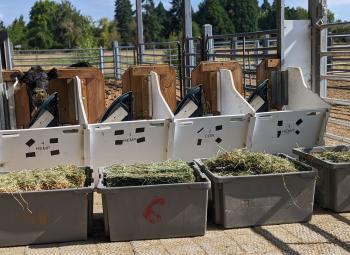
Oregon’s hemp industry generates a large volume of spent hemp biomass — the leftover plant material after cannabidiol is extracted. The material has a strong nutrient profile and could serve as a cost-competitive alternative to...
Feb 2026 |
Impact Story
Credit: Daria Van De Grift (Cropped from original)
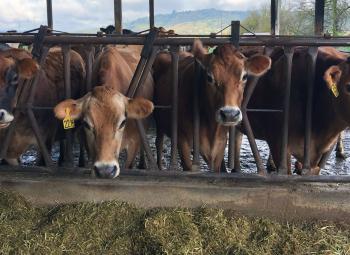
Raw milk naturally contains microorganisms. Most are harmless, but higher microbial levels can shorten shelf life, complicate processing and signal hygiene problems that raise costs for farms and processors. For Oregon’s dairy ...
Feb 2026 |
Impact Story
Credit: Natural Resources Conservation Service (Cropped from original)
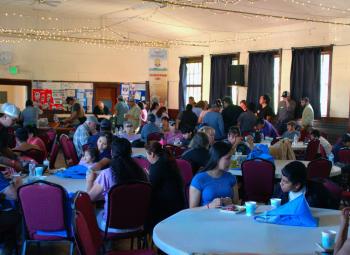
Wildfire risk continues to increase across Oregon, but access to preparedness education is not evenly distributed. Spanish-speaking renters, farmworkers and forest workers often face barriers that limit their ability to prepare for, ...
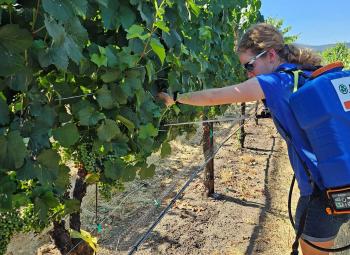
Wildfire smoke is a growing risk for wine grapes in Oregon and across the West. When smoke reaches vineyards near harvest, grapes can take in smoke compounds that later affect wine flavor and aroma. In bad years, growers ...
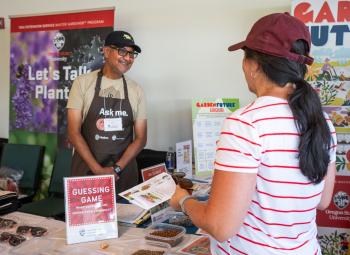
In 2024, Oregon State University Extension Service Master Gardener volunteers met Oregonians where they were. Across the state, people were looking for affordable, healthy food, practical and culturally meaningful gardening education, ...
For more than 60 years, Outdoor School has provided Oregon students with a unique opportunity to learn about science and the natural world through direct experience. What began in 1957 in Southern Oregon quickly expanded, with ...
Oregon’s more than 79,000 family forest landowners manage 3.6 million acres of private forestland, contributing significant economic, ecological and social value. These landowners have diverse goals and face complex challenges in ...
Professional tree measurement tools can be costly, but the OSU Woodland Stick offers an affordable, simple and user-friendly alternative. Created by the Oregon State University Forestry and Natural Resources Extension Program, this ...
Hay is one of Oregon's top agricultural commodities, ranking third in the state in 2022 with a total value of about $785.5 million. This included 2.78 million tons of alfalfa hay, valued at around $488.2 million, and 1.28 ...
Small-acreage farms in Oregon play a crucial role in the state's agricultural landscape. According to the 2022 Census of Agriculture, a majority of the 35,547 farms in Oregon are small acreage, meaning they are 50 acres or ...