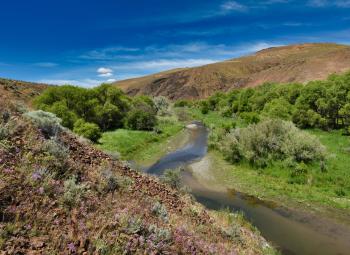
Riparian areas — streamside zones near rivers, creeks, wetlands and other water bodies — support 80% of wildlife in arid rangelands, even though they make up just 2% of sagebrush landscapes. These areas are essential to ...
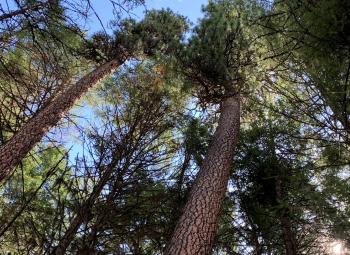
Forest landowners in northeast Oregon are dealing with the effects of nearly a century of fire suppression. With low timber prices and rising wildfire risk, many need financial assistance to complete fuels reduction and forest ...
The spongy moth — formerly known as the gypsy moth — is a destructive invasive insect that threatens forest health across the United States. It feeds on more than 300 species of trees and shrubs, including alder, ...
More than 79,000 family forest landowners manage approximately 3.6 million acres of private forestland in Oregon. Oregon State University Extension Service’s Tree School offers a valuable opportunity for these land stewards to build...
An estimated 30–40% of food in the United States is wasted each year, contributing roughly 170 million metric tons of greenhouse gas emissions and accelerating climate change. In fruit juice production, only 70–75% of the ...
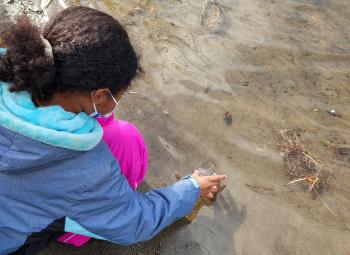
Raising salmon and trout eggs in an elementary school classroom is an effective way to enhance a child’s understanding of how vitally important their environment is for their survival, and how people can greatly influence ...
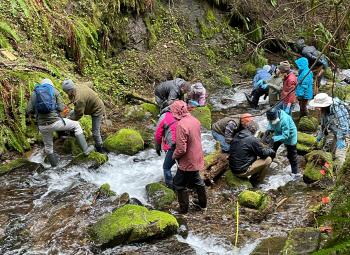
People from around the world visit Oregon to experience its natural beauty — yet many residents lack deeper ecological knowledge, like how animal, plant and insect interactions shape the state’s environments. Certified naturalists...
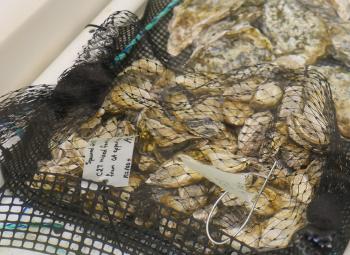
Ocean acidification is a change in ocean chemistry caused by increasing levels of carbon dioxide in the atmosphere. As oceans absorb more carbon dioxide, less carbonate is available — a key ingredient marine organisms need to ...