The cattle industry is a significant part of Oregon's economy, contributing over $900 million annually. It consistently ranks first or second among the state’s most-valued agricultural commodities, providing numerous employment ...
Grass seed is commonly used to establish and maintain lawns in residential, commercial and public spaces, providing aesthetic appeal and recreational areas. It is essential for creating durable and resilient surfaces for sports ...
The cattle industry is a significant part of Oregon's economy, contributing over $900 million annually. It consistently ranks first or second among the state’s most-valued agricultural commodities, providing numerous employment ...
4-H is the largest out-of-school youth program in the United States and the only nationwide youth organization administered through land grant universities. In Oregon, 4-H is affiliated with Oregon State University. 4-H Youth ...
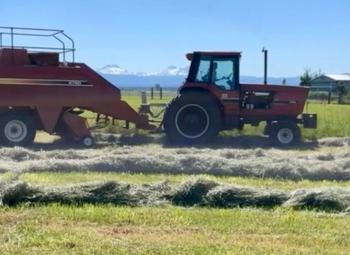
Hay and forage producers in Central Oregon, Oregon’s top hay-producing region, face significant challenges, including limited irrigation water supply, increasing fertilizer and input costs and changing insect pest dynamics. Overcoming ...
In ranching, traditional fencing requires significant labor and financial investment to install and maintain. Physical fences are rigid and can limit the ability to adapt grazing patterns to changing environmental conditions. Physical ...
Latino students make up nearly 25% of Oregon’s K–12 public school population yet face persistent barriers to college access. Nationally, only 58% of Hispanic high school completers enrolled in college immediately in 2022 and ...
Families in Oregon face several challenges when it comes to finding quality child care. Because there is a significant shortage of child care slots, especially for infants and toddlers, many families struggle to find available ...
Wheat is one of Oregon’s most valuable crops. In 2022, farmers planted approximately 740,000 acres of winter wheat and other varieties across the state. The crop had a direct value of $431 million, ranking sixth among ...
Forest managers in the Pacific Northwest face the challenge of balancing timber harvests with maximizing carbon storage. Carbon stored in forests helps offset climate change — U.S. forests absorb about 13% of the country’s ...