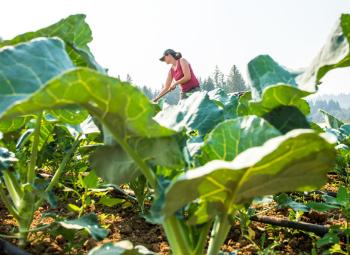
A growing body of literature documents the mental health impacts of climate change on the general population, but there is little focus on agricultural populations in the United States — even though farmers may be ...
The cattle industry is a significant part of Oregon's economy, contributing over $900 million annually. It consistently ranks first or second among the state’s most-valued agricultural commodities, providing numerous employment ...
4-H is the largest out-of-school youth program in the United States and the only nationwide youth organization administered through land grant universities. In Oregon, 4-H is affiliated with Oregon State University. 4-H Youth ...
Oregon’s forest sector is a vital part of the state’s economy and communities. It ranks third in Oregon’s gross domestic product, producing 28% of the nation’s plywood and 16.5% of U.S. lumber. But the industry faces ...
Latino students make up nearly 25% of Oregon’s K–12 public school population yet face persistent barriers to college access. Nationally, only 58% of Hispanic high school completers enrolled in college immediately in 2022 and ...
Older adults in Oregon face several health challenges, including chronic conditions such as heart disease, diabetes, arthritis and hypertension. Many older adults have mobility challenges due to muscle weakness, joint pain and low ...
Families in Oregon face several challenges when it comes to finding quality child care. Because there is a significant shortage of child care slots, especially for infants and toddlers, many families struggle to find available ...
Research shows that while 80% of community college students intend to earn a bachelor’s degree, only 25% transfer to a four-year college within five years — and just 17% earn a bachelor’s degree within six years of ...
Across the United States, the number of women in agriculture continues to grow. According to the 2022 Census of Agriculture, 1.2 million women now make up 36.3% of all U.S. farm producers. In Oregon, that number is even ...
Data show that among school-age children, low physical activity, poor diet, and extended periods of inactivity are associated not only with poor health but also with poor educational outcomes. In 2007, Oregon passed a law ...