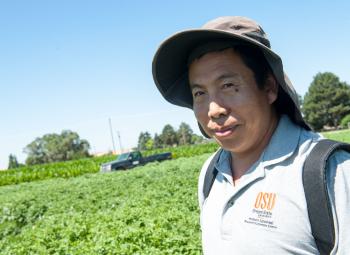
Accurate harvest timing helps vegetable growers meet market demand, minimize pest damage and schedule labor efficiently. Traditionally, growers plan planting and harvest dates using a calendar and the crop’s estimated days to ...
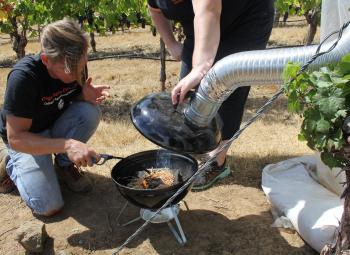
Oregon ranks fourth in wine production in the United States, following California, Washington and New York. The state is renowned for its high-quality wines, particularly pinot noir and chardonnay, and has several distinct ...
Grass seed is commonly used to establish and maintain lawns in residential, commercial and public spaces, providing aesthetic appeal and recreational areas. It is essential for creating durable and resilient surfaces for sports ...
4-H is the largest out-of-school youth program in the United States and the only nationwide youth organization administered through land grant universities. In Oregon, 4-H is affiliated with Oregon State University. 4-H Youth ...
In ranching, traditional fencing requires significant labor and financial investment to install and maintain. Physical fences are rigid and can limit the ability to adapt grazing patterns to changing environmental conditions. Physical ...
Latino students make up nearly 25% of Oregon’s K–12 public school population yet face persistent barriers to college access. Nationally, only 58% of Hispanic high school completers enrolled in college immediately in 2022 and ...
Families in Oregon face several challenges when it comes to finding quality child care. Because there is a significant shortage of child care slots, especially for infants and toddlers, many families struggle to find available ...
Wheat is one of Oregon’s most valuable crops. In 2022, farmers planted approximately 740,000 acres of winter wheat and other varieties across the state. The crop had a direct value of $431 million, ranking sixth among ...
In the irrigated farmland of the Lower Columbia Basin, onions and potatoes are the region’s major high-value crops. These crops are typically rotated to manage pests and diseases, preserve soil health, and optimize resource use....
Research shows that while 80% of community college students intend to earn a bachelor’s degree, only 25% transfer to a four-year college within five years — and just 17% earn a bachelor’s degree within six years of ...