Gilliam

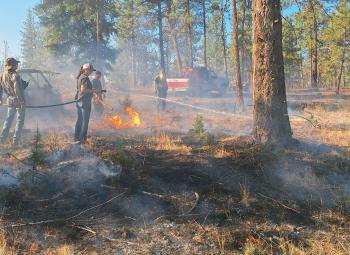
Landowners expand prescribed fire use in Eastern Oregon

More than a century of fire exclusion has reshaped forests and rangelands across Eastern Oregon. Without regular low-intensity fire, fuels have built up, increasing the risk of larger, more severe wildfires. Community-led burning ...

Apr 2026 | Impact Story

Producers gain skills to meet beef market standards

Cattle production is one of Oregon’s leading agricultural commodities. To maintain market access and consumer confidence, beef producers must meet evolving standards for animal health, handling and traceability. The Beef Quality ...

Apr 2026 | Impact Story

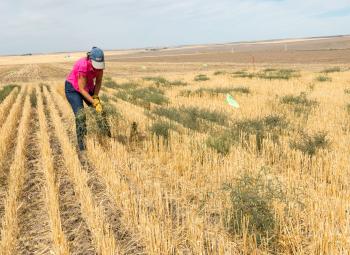
Farmers build skills to reduce wildfire risk

Wildfires are increasingly impacting agricultural lands in Eastern Oregon due to a changing climate, invasive annual grasses and evolving farming practices. Dryland wheat producers have adopted no-till systems to reduce erosion and ...

Apr 2026 | Impact Story

Gilliam County producers gain tools and guidance

Gilliam County in north-central Oregon is one of the state’s leading dryland wheat-producing regions and part of the Columbia Plateau’s grain belt. The county’s rolling wheat fields support a large share of its agricultural ...

Mar 2026 | Impact Story

School IPM Program protects health and safety of Oregon children

Asthma is the top cause of absenteeism in U.S. public K–12 schools. In Oregon, common school pests such as mice, cockroaches and flies can trigger asthma and spread diseases including E. coli, Lyme disease and salmonellosis. ...

Mar 2026 | Impact Story

Oregon State research helps wheat growers manage glyphosate-resistant Russian thistle

Russian thistle (Salsola tragus), also known as tumbleweed, is a persistent summer annual weed and an ongoing challenge for wheat growers in Eastern Oregon. The weed infests nearly 5 million acres across the Pacific Northwest, ...

Oct 2025 | Impact Story

OSU Extension enhances mental health support for rural Oregonians

Farmers and ranchers face intense stress from crop failures, market changes, unpredictable weather, injuries and more. These pressures contribute to rising rates of depression — and, too often, suicide. According to the Centers for...

Jul 2025 | Impact Story

OSU efforts help growers spot and manage soilborne wheat mosaic virus

The direct value of the wheat harvest in Oregon in 2022 was approximately $431 million, ranking sixth in value among the state's agricultural commodities. That economic weight means growers stay vigilant against threats to yield ...

May 2025 | Impact Story

OSU study reveals benefits of crop rotation and no-till wheat farming in northeast Oregon

In the drylands of Eastern Oregon, wheat farming is a way of life — and growers are looking for ways to replenish stored soil carbon and improve soil health in their fields. Oregon State University researchers at the ...

May 2025 | Impact Story

Outdoor School nurtures curiosity, connection and environmental understanding

For more than 60 years, Outdoor School has provided Oregon students with a unique opportunity to learn about science and the natural world through direct experience. What began in 1957 in Southern Oregon quickly expanded, with ...

Mar 2025 | Impact Story