Oregon has about 44,000 private woodland owners managing 3.5 million acres of forestland. These lands make up 12% of the state’s forests and contribute to economic vitality and environmental health. The program equips landowners ...
Sep 2025 |
Impact Story
Credit: Oregon State University Extension Service (Cropped from original)
The Oregon Season Tracker program, coordinated by Oregon State University Extension, has engaged hundreds of volunteers across Oregon to collect critical environmental data on precipitation and plant phenology. By installing standardized ...
Forests cover more than 90% of Lane County’s 2.9 million acres. Over 3,600 families manage small woodlands, supporting local jobs, ecological health, recreation and community resilience. These family forestland owners are part of a...
Apr 2025 |
Impact Story
Credit: Kaci Radcliffe, The Nature Conservancy (Cropped from original)
Fire is broadly considered an important functional process in forests, rangelands and most other ecosystems. The reduction of periodic fire due to extensive fire suppression practices has been one of the major drivers of ecosystem...
Forest landowners and natural resource professionals often face challenges that require specialized knowledge. Traditionally, Oregon State University Extension Service’s Forestry and Natural Resources Program has addressed these needs ...
Professional tree measurement tools can be costly, but the OSU Woodland Stick offers an affordable, simple and user-friendly alternative. Created by the Oregon State University Forestry and Natural Resources Extension Program, this ...
The emerald ash borer (EAB) is an invasive beetle that infests and kills ash trees. It was first detected in Oregon on June 30, 2022, in Forest Grove, marking its arrival on the West Coast. EAB poses a significant threat...
Feb 2025 |
Impact Story
Credit: Bob Schroeder, U.S. Forest Service. (Cropped from original)
Douglas-fir is one of the world’s most economically important tree species. In southwest Oregon, it is the dominant tree in many low- to mid-elevation forests. Douglas-fir provides critical wildlife habitat, stores carbon and ...
Forest managers in the Pacific Northwest face the challenge of balancing timber harvests with maximizing carbon storage. Carbon stored in forests helps offset climate change — U.S. forests absorb about 13% of the country’s ...
Jan 2025 |
Impact Story
Credit: trekandphoto - Adobe Stock (Cropped from original)
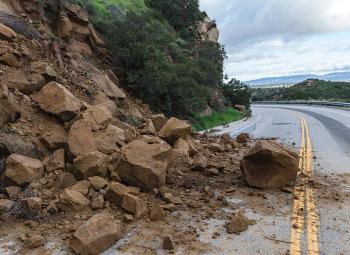
Landslides, often triggered by extreme events such as heavy precipitation, wildfires and earthquakes, pose significant environmental, societal and economic risks. In the mountainous, forested terrain of the West, including Oregon, shallow...